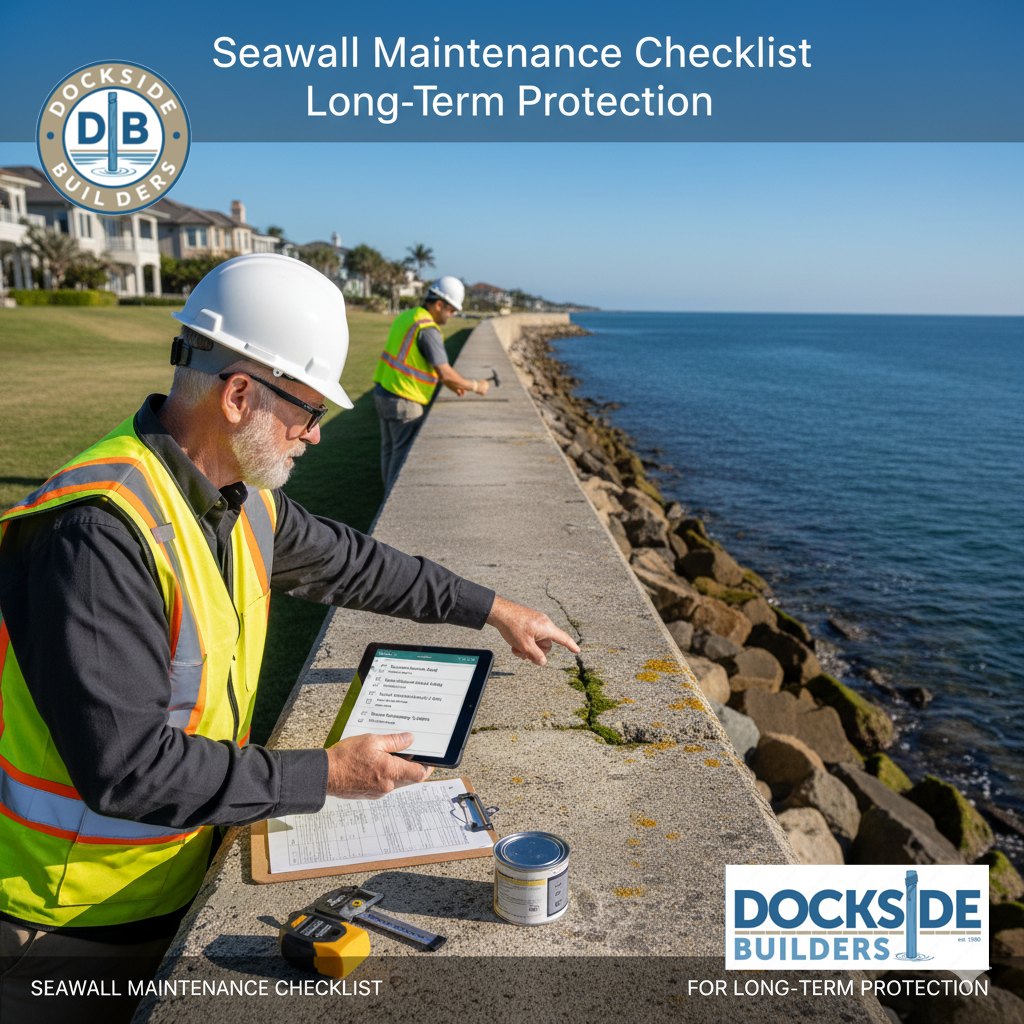
The Ultimate Seawall Construction and Maintenance Checklist for Florida’s Coastal Properties
The Ultimate Seawall Construction & Maintenance Checklist for Florida’s Coastal Properties | Dockside Builders Sebastian FL
Introduction
Owning a waterfront property in Sebastian, Florida (32976) offers an unmatched lifestyle—gorgeous views, direct water access, and the kind of serenity that comes with living by the sea. But along with those perks comes the responsibility of protecting your shoreline from the natural forces that threaten it. That’s why it’s vital to follow a solid seawall maintenance plan that addresses everything from erosion prevention to watershed care, and ensures your investment remains safe and stable.
At Dockside Builders, we specialize in waterfront protection, including building and maintaining seawalls that really work. Together, we’ll explore a detailed checklist, the bigger picture of why this matters, and a step-by-step walk-through of the construction process – all oriented toward long-term protection for your property.
Why Seawall Maintenance Matters for Waterfront Properties
The Threats You Face
Living on the water brings exposure to unique risks. The elements that make waterfront living beautiful also make it vulnerable: salt spray, tidal movement, storm surges, rising sea levels, shifting soils, and environmental threats like erosion. As one industry guide notes, “erosion is a significant concern for seawalls in Florida.”
What a Seawall Protects
A well-constructed seawall does more than look good—it works hard. It helps with erosion prevention, it safeguards your foundation and shoreline, and it enhances the benefits for waterfront properties by maintaining land integrity and property value. According to a seawall guide, installation of the right structure can significantly reduce risk of land loss, flooding, and structural damage.
Why Maintenance Is Critical
Even the best seawall is not “set it and forget it.” Regular seawall maintenance is essential to keep the structure functioning, because water, weather, and soil movement are relentless. One article underscores: “Without regular maintenance, even the most well-built seawalls can crack, lean, or collapse.”
Seawall Maintenance Checklist – Localized for Sebastian, Florida (32976)
Here’s a complete checklist customized to your region and property by Dockside Builders, addressing both routine care and proactive planning.
1. Inspection & Monitoring
-
Conduct a visual inspection at least every six months, ideally in spring and fall. Look for cracks, leaning walls, exposed rebar, soil loss, water seepage, and clogged drainage. dalinghausconstruction.com+1
-
After any storm event (hurricane, tropical storm, strong tidal surge), perform a post-event inspection.
-
Monitor the shoreline behind the wall for any signs of settlement, wash-out, or undermining.
2. Drainage & Water Management
-
Confirm that all weep holes and drainage outlets behind the wall are clear and functioning; blocked drainage leads to hydrostatic pressure and structural stress.
-
Ensure the grade behind the wall slopes away from the seawall so that water doesn’t accumulate at the base.
-
Remove debris, leaf litter, and sediment build-up around the seawall base or drainage zones (especially after storms).
3. Vegetation & Shoreline Care
-
Trim or remove large root systems or trees that lean toward the seawall—roots can undermine the structure or cause cracking.
-
Maintain a vegetative buffer set back from the wall to reduce wave energy and erosion, but avoid planting heavy trees right adjacent to the wall.
-
Monitor for shoreline erosion adjacent to the seawall; if you notice scouring or loss of soil behind the wall, address it early.
4. Structural Integrity
-
Look for visible cracks in the wall surface or cap, spalling concrete, exposed corroded rebar, rust stains, bulging or leaning wall sections.
-
Check for exposed or corroded tie-backs (anchors or rods that stabilize the wall). These are especially critical in flexible wall systems.
-
Observe the wall cap: if the top is cracked, worn or separated, water may infiltrate and weaken the structure from above.
5. Erosion Prevention & Waterfront Care
-
Review the toe of the seawall (the base where it joins the water) for signs of erosion or scour. Revetment (rock, riprap) may be needed if wave action is strong.
-
Consider placement of riprap or other erosion mitigation materials if boat wake, currents, or storms are common in your local channel.
-
Ensure your routine maintenance includes attention to the shore-zone and not just the vertical wall.
6. Documentation & Review
-
Keep records of inspections, maintenance performed, dates, photographs, any incidents (storms, high tides) and repairs done.
-
Schedule periodic professional reviews every few years (especially if your wall is older or you notice early warning signs).
-
Evaluate whether the wall still meets current conditions (sea-level rise, storm intensity) and whether upgrades might be necessary.
7. Repair & Upgrade Actions
-
If minor cracks are found, seal them with appropriate marine-grade materials immediately. Small issues caught early save significant cost later.
-
If the wall is showing serious structural stress (leaning, major erosion of foundation, exposed anchors), schedule a more comprehensive professional assessment for possible reinforcement or rebuild.
-
Plan for upgrades or replacement when performance is compromised or when waterfront conditions have changed (higher tides, more storm surge).
8. Safety & Access
-
Ensure safe access for inspection – avoid driving heavy equipment near the seawall unless it’s rated for such weight. Overloading behind the wall may increase failure risk.
-
Keep the area clear of heavy loads, large structures or equipment right behind the seawall line.
-
If you have a dock or boat lift near the seawall, inspect those structures too—movement or failure in the seawall can affect associated installations.
The Seawall Construction Process (and How it Relates to Maintenance)
Even though this article is focused on maintenance, understanding the construction process of a seawall helps you grasp how maintenance activities tie into each step. At Dockside Builders in Sebastian, FL, we follow a methodical approach to ensure the wall is built well—and built for long-term maintenance.
Initial Consultation and Site Assessment
The journey begins with the Initial Consultation and Site Assessment: evaluating your property’s shoreline, water levels, soil, wave action (including boat wakes and tidal flow), any history of environmental threats, and how your property is exposed. According to Dockside Builders: “During this meeting, we evaluate the site conditions, including the geography of the land, water levels, and potential erosion risks.” docksidebuilders.com
This phase sets the stage for a seawall designed to handle local conditions—critical for minimizing maintenance headaches later.
Design and Engineering Phase
Next comes the Design and Engineering Phase: selecting materials (concrete, steel, timber, vinyl), deciding on structural reinforcements (such as tie-backs), designing drainage behind the wall, and accounting for tidal variation and storm surge. Dockside Builders emphasizes their designs include things like “frequent (each 6′) tie-backs and double whaler” for strength in a marine environment. docksidebuilders.com
A well-designed system means fewer repairs and smoother maintenance over time.
Permits and Regulatory Requirements
Because Sebastian, FL is a coastal and regulated zone, ensuring compliance is essential. The Permits and Regulatory Requirements phase covers local, state and environmental agency approvals. A seawall project built without proper permitting can result in fines or forced modifications. duncanseawall.com+1
From a maintenance viewpoint, walls built with full permitting generally meet higher standards and are easier to maintain.
The Construction Phase
During the Construction Phase, the actual work is done: site preparation, excavation, foundation installation, wall construction, drainage installation, and tie-back anchors. Dockside Builders describes one of their high-quality seawalls: “12″ × 18″ monolithic concrete cap, monolithic dead man anchor, frequent … stainless rod tie-backs” for a “lifetime seawall.” docksidebuilders.com
Maintenance is easiest when the construction is done right the first time—fewer surprises, fewer weak points to watch.
Final Inspection and Maintenance
Once construction is complete, there is Final Inspection and Maintenance: checking all work, documenting as-built conditions, verifying drainage & anchor function, and then planning future maintenance. Because even a new seawall must be monitored, this stage sets the maintenance schedule going forward. Dockside Builders mentions that a seawall is “an essential measure for long-term protection” in Sebastian. docksidebuilders.com
Local Considerations for Sebastian, Florida (32976)
When dealing with waterfront protection in Sebastian, there are specific local factors to keep in mind that affect both waterfront care and maintenance planning.
Storms and Tropical Weather
Sebastian sits on Florida’s Atlantic coast and is susceptible to hurricanes, tropical storms, heavy rainfall and sea-level impacts. That means your seawall must handle not only everyday wave action, but more extreme events. Regular inspections after storm events are even more critical here.
Tidal and Wake Action
You may face boat traffic, wakes, tidal fluctuations and wind-driven waves even on calm days. Over time, those forces impact your wall and the soil behind it. That’s where erosion prevention must be active—not just passive observation.
Soil Conditions & Corrosion
Florida’s saltwater environment accelerates corrosion of metal components and deterioration of concrete or timber. For example, rust stains may signal exposed rebar, which is a red flag. There’s also soil/riprap interaction and wave scour to think about.
Regulatory & Environmental Sensitivity
Florida regulations around coastal construction are strict. Because of local ecosystems, wetlands, sea-level rise considerations and environmental protection, your seawall must comply—and maintenance may involve managing vegetation, shore buffers, and ensuring any shoreline treatments are environmentally sound. One guide notes that structural methods must consider the broader coastal ecosystem.
Property Values and Insurance
A well-maintained seawall in Sebastian adds value to your property and may reduce risk for insurers. One guide states: “Homes with properly maintained seawalls tend to sell for higher prices.” duncanseawall.com
Benefits of Waterfront Properties with a Strong Seawall
Let’s recap some of the major benefits when you have a well-maintained seawall and a plan for upkeep:
-
Protection of your shoreline from land-loss and erosion.
-
Enhanced safety and reduced risk of flooding or storm damage.
-
Stronger foundation for your home or dock structure, meaning less worry and lower repair risk.
-
Improved resale value and attractiveness of your property.
-
Ability to enjoy waterfront amenities (dock, boat lift, outdoor living) with greater confidence.
-
Reduced long-term cost of repairs, thanks to proactive seawall maintenance rather than reactive fixes.
In short: investing in the construction and ongoing care of your seawall under the guidance of professionals like Dockside Builders helps you maximize all the benefits for waterfront properties and avoid surprises.
How Dockside Builders Approaches Seawall Construction and Maintenance
As a locally-based contractor in Sebastian, FL, Dockside Builders brings deep experience in waterfront construction, shoreline protection, and ongoing care of seawalls. Here’s how we integrate service and customer care:
-
We begin with a Initial Consultation and Site Assessment, tailored to the Sebastian area (water levels, tidal action, boat traffic, soil).
-
We handle the Design and Engineering Phase, selecting materials and reinforcement (including tie-backs) appropriate for Florida conditions.
-
We navigate Permits and Regulatory Requirements, so you don’t have to worry about compliance.
-
We carry out the Construction Phase with quality materials, proper foundations, drainage and engineered reinforcements.
-
We place a high priority on Final Inspection and Maintenance, leaving you with documentation, timeline for upkeep, and a partner for future inspections.
-
And finally, we provide ongoing guidance for seawall maintenance, root-cause erosion prevention, and proactive shoreline care—so your structure performs well for decades.
This lifecycle approach means you’re not just getting a seawall built. You’re getting long-term peace of mind and a maintenance partner.
Making Your Maintenance Plan Actionable
Here’s a practical timeline and set of actions to integrate into your regular maintenance plan in Sebastian, Florida:
Quarterly (every 3 months)
-
Walk the shoreline and inspect visually for obvious issues (cracks, leaning walls, exposed rods).
-
Clear any debris around the seawall base, weep holes or drainage.
-
Remove or trim vegetation near the wall.
-
Take photos of current condition (for documentation).
Bi-Annually (twice a year)
-
Conduct a more thorough inspection (spring & fall). Check for water pooling behind the wall, soil settlement, erosion at the toe, anchor condition.
-
Review drainage systems and, if needed, clear or repair weep holes or filters.
-
Review the grade behind the wall—ensure water flow is away and no new heavy loads have been placed near the wall.
-
Confirm no new boat wake damage, strong storm events or changes to shoreline usage.
After Major Storm or Significant Event
-
Immediately visually inspect the seawall for damage (cracking, lean, soil wash-out).
-
Check behind the wall for sudden soil movement, exposed root systems, new erosion, or standing water.
-
If you find significant issues, contact Dockside Builders or another marine contractor for a professional assessment.
Every 3–5 Years
-
Schedule a professional structural inspection with a marine contractor to evaluate anchors, tie-backs, foundation integrity.
-
Review whether your seawall still meets current exposure conditions (sea-level rise, boat traffic, new local regulations).
-
Update your maintenance plan, adjust timeline, consider upgrades if your wall is nearing its lifecycle end.
Documentation
-
Maintain a folder (digital or physical) with all inspection notes, photos, and maintenance actions.
-
Record the date of each inspection, description of findings, and any action taken.
-
Keep records of construction (as-built drawings, anchors, materials) in case you sell or need insurance/repair justification.
Key Terms and Their Relevance (Integrated)
Here’s how your target keywords apply to this discussion:
-
Seawall maintenance: the ongoing inspection, repair and care tasks that keep the seawall functioning properly.
-
Erosion prevention: proactive strategies (such as drainage, proper grading, toe protection) to prevent soil loss behind or adjacent to the seawall.
-
Waterfront care: the broader category of maintaining your waterfront property, including the seawall, shore vegetation, docks, boat lifts, etc.
-
Coastal upgrades: when your existing seawall or shoreline features need to be enhanced or upgraded—whether due to increased exposure, higher tides, or newer materials.
-
Tie-backs: reinforcement components (rods or anchors) that secure the seawall to the land behind it; critical for structural stability.
-
Environmental threats: factors like storms, sea-level rise, salt water corrosion, tidal action, and erosion that threaten your shoreline.
-
Seawalls protect properties: the core function of a seawall—defending your land, structures, and investment from natural forces.
-
Benefits for waterfront properties: improved stability, value, usability of the property, reduced risk, and enjoyment of waterfront living.
-
Seawall construction process: the full lifecycle from planning, design, permitting, building and post-construction care.
-
Initial consultation and site assessment: the first step in the process of building or evaluating a seawall—understanding your property’s unique conditions.
-
Design and engineering phase: the detailed planning that determines materials, structural details and reinforcement needed.
-
Permits and regulatory requirements: the legal and environmental compliance necessary in coastal zones like Sebastian, Florida.
-
The construction phase: where actual building takes place—foundation, wall, drainage and reinforcement.
-
Final inspection and maintenance: finishing the construction, verifying performance, and establishing the long-term maintenance plan.
-
Dockside Builders for seawall construction: the local company (in Sebastian, FL) we’ve referred to throughout, qualified to handle both construction and maintenance of seawalls.
Frequently Asked Questions (FAQ)
How often should I inspect my seawall?
At minimum once a year—but ideally twice. Especially in coastal Florida, you should inspect after storms and heavy tides.
What are the early signs of failure I should watch for?
Cracks in the wall, leaning or bulging sections, exposed or rusting metal, soil wash-out behind the wall, water pooling behind the wall, clogged drainage.
Do tie-backs require special maintenance?
Yes—tie-backs should be inspected for corrosion, exposure and integrity because they are often hidden but vital structural components. If damaged, they compromise the seawall’s stability.
Can I install a seawall myself to save cost?
Due to the complexity of coastal loads, permitting, drainage, and structural reinforcement, it’s strongly advisable to use a professional marine contractor such as Dockside Builders. A poorly installed wall often costs more in maintenance and repairs.
How long will a seawall last?
Material, exposure, construction quality and maintenance determine lifespan. Good concrete walls with proper care can last 30-50 years or more in Florida.
What happens if I neglect maintenance?
Without maintenance you could face accelerated corrosion, soil undermining, structural failure, higher repair costs, and even property devaluation. Prevention is far more affordable than major rebuilds.
Summary & Looking Ahead
Protecting your waterfront property in Sebastian, Florida (32976) means being proactive—not passive—about shoreline defense. A well-constructed seawall by Dockside Builders is your foundation, but the ongoing seawall maintenance, thoughtful erosion prevention, and comprehensive waterfront care make the difference between occasional repairs and decades of peace of mind.
By following the checklist we’ve outlined and staying alert to local conditions (storms, tidal changes, boat traffic), you can safeguard the benefits for waterfront properties and ensure your investment remains stable and attractive.
If you’re considering a new seawall, upgrade, or want assistance establishing your long-term maintenance plan, contact Dockside Builders—experienced in the full seawall construction process, from initial consultation and site assessment, through design and engineering phase, handling permits and regulatory requirements, executing the construction phase, and ready to support final inspection and maintenance.
Your shoreline deserves expert attention. With the right partner and the right maintenance approach, you’ll protect your property—and your peace of mind—for years to come.
source: “America’s Mortgage Solutinos (AMS)”
Questions, Comments or For more information you can call
Christian Penner Branch Manager at 561-316-6800 or email us at TheMortgageTeam@ChristianPenner.com
Approval Hotline: 561-316-6800
Helping You Achieve the American Dream of Home Ownership


Or You can click “Call Me” below to call Christian Penner directly using Google Voice






Do you know how much home you can afford?
Most people don’t... Find out in 10 minutes.
Get Pre-Approved Today