The Hidden Property Tax Loophole Costing Floridians Millions: Millage Rate Hikes Are the Silent Tax Increase
Meta Description:
A statewide audit by Florida’s CFO uncovers over $400 million in taxpayer waste, exposing how counties use millage rate hikes to bypass property tax caps. Learn how your taxes may be rising silently—and what you can do about it.
Introduction
A quiet tax revolution has been brewing across Florida. While homeowners believed their property taxes were protected under the state’s Homestead Exemption, a recently launched audit reveals a darker truth.
Florida’s new Chief Financial Officer, Blaise Ingoglia, took on every county in the state—launching a sweeping audit that uncovered more than $400 million in budget waste, misuse, and potential fraud. The culprit behind much of the hidden tax burden? A little-known mechanism called the millage rate.
This isn’t just financial mismanagement—it’s a direct hit to Floridians’ wallets.
The Homestead Cap Isn’t the Whole Story
What the Homestead Exemption Actually Does
Florida’s Homestead Exemption was designed to protect homeowners from skyrocketing property taxes by capping how much their taxable value can increase annually, typically no more than 3%.
But there’s a catch: it only caps the value, not the tax rate applied to that value.
How Counties Found a Workaround
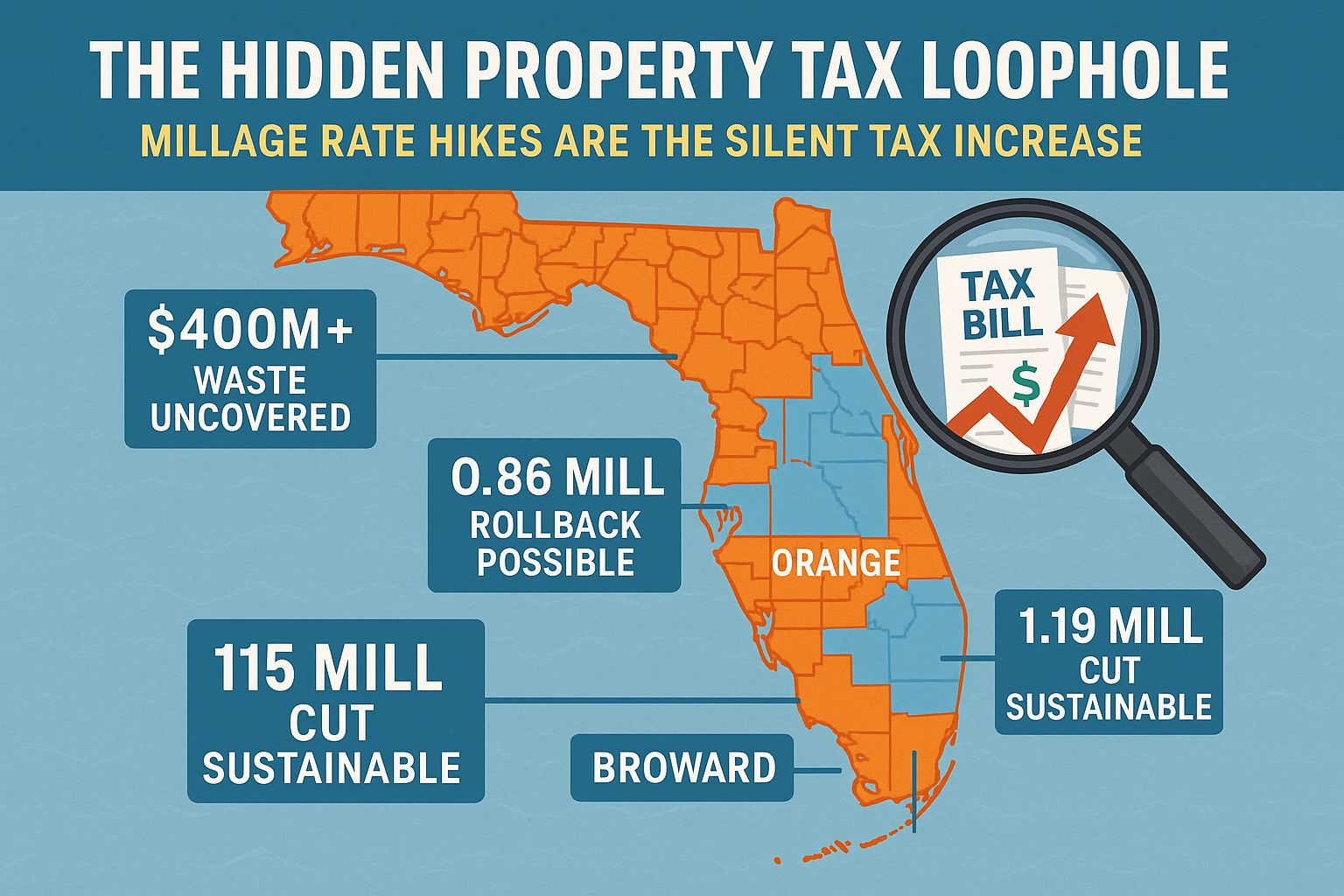
Here’s the loophole: counties leave your home’s value untouched—but they quietly increase the millage rate, which is the multiplier used to calculate your tax bill.
For example:
- Home’s taxable value: $200,000
- Millage rate: 10 mills (or $10 per $1,000 of value)
- Tax bill: $2,000
Now imagine your home’s taxable value stays the same, but the county raises the millage rate to 12 mills:
- New tax bill: $2,400
- Result: A 20% increase—without changing your home’s value
This tactic allows local governments to generate more revenue without triggering the legal safeguards tied to property value increases—and without voter approval.
Audit Findings: Waste, Fraud, and Vanity Projects
Orange County
- General fund increased by $560 million since 2020
- Only 79,000 new residents in that period
- That’s over $7,000 in new spending per person
- CFO’s team identified $190 million in waste
- 661 new government hires, many with high salaries
- Average government wage rose 24.5% in just four years
Despite the spending surge, no corresponding increase in essential services was noted. Auditors found that Orange County could reduce its millage by 0.86 mills and still fund all core services.
Jacksonville (Duval County)
- Budget ballooned by $692 million since 2019
- CFO estimates at least $200 million is excessive spending
- A 1.19-mill rollback is feasible without cutting services
- In one bizarre case, the Mayor authorized $75,000 for a hologram of herself at the airport
West Park, Florida
- City commissioners attempted a 4x pay raise
- Salaries jumped from $9,600 to $40,000 for part-time roles
- Full benefits added another $43,000+ per commissioner
Hillsborough County (Tampa)
- Over $250 million granted to nonprofits in a decade
- Many programs had no oversight or performance metrics
- Number of funded nonprofits doubled since 2019
Subpoenas, Missing Records, and Political Resistance
The audit didn’t just reveal waste—it uncovered obstruction.
In Orange County, CFO Ingoglia was forced to issue 16 subpoenas, including to the county attorney, after discovering potential evidence of altered or missing financial documents.
Red flags included:
- Improper procurement practices
- DEI-related grants and climate projects with questionable legality
- Falsified reports or documents being renamed and hidden
These behaviors suggest systemic issues—not isolated mistakes.
Cutting Waste ≠ Cutting Services
One of the biggest myths counties use to justify millage hikes is that any rollback would threaten police, fire, or infrastructure funding.
CFO Ingoglia disputes this entirely.
“There is plenty of money in the system. The question is where it’s going, not whether we have enough.”
In Orange County alone, the state found that even with an 86-mill reduction, essential services would remain fully funded. The real issue is payroll padding, excessive raises, and unnecessary vanity projects.
Why This Matters to Every Florida Homeowner
If your home’s taxable value is capped—but your tax bill keeps rising—it’s likely due to millage increases.
This silent tax hike is:
- Legal, but rarely discussed publicly
- Not subject to voter approval
- Used to justify unchecked government growth
And now, with growing calls to eliminate property taxes entirely for primary residences by 2026, the stakes are even higher. Unless existing waste is cut, tax burdens may simply shift to sales taxes, tourism, or other unstable sources.
What You Can Do
Don’t wait until your next tax bill to act. Here’s how to take control:
- Attend your next county commission meeting and demand transparency
- Request a breakdown of millage increases over the last 5 years
- Ask for audits of nonprofit spending and federal fund usage
- Support rollbacks where surpluses exist
- Vote out officials who resist accountability or hide financial reports
Conclusion: Time for Action, Not Excuses
The audit led by CFO Blaze Ingoglia has pulled back the curtain on one of the most misunderstood—and abused—systems in Florida taxation.
The Homestead Cap gave homeowners peace of mind. But the millage rate loophole has quietly undermined that promise.
Now that we know where the money is, the question becomes: Will we demand it be used wisely—or let the abuse continue unchecked?
The future of property tax reform depends on what happens next.
Read from source: “Click Me”
Questions, Comments or For more information you can call
Christian Penner Branch Manager at 561-316-6800 or email us at TheMortgageTeam@ChristianPenner.com
Approval Hotline: 561-316-6800
Helping You Achieve the American Dream of Home Ownership


Or You can click “Call Me” below to call Christian Penner directly using Google Voice