Why Some Homes Sell Quickly — and Others Don’t Sell at All
Meta Description:
In today’s evolving housing market, listings must stand out from day one. Learn why some homes sell fast while others linger, and discover actionable strategies to ensure your home is among the former.
Introduction
In recent years, many homeowners saw an unprecedented seller’s-market environment: inventory was extremely low and houses sold almost instantly. But the playing field has shifted. With more homes coming on the market and supply rising, simply listing your home is no longer enough to guarantee a quick sale. Instead, your property must capture buyer attention from the first day.
Today, listings are up by approximately 20 % year-over-year in many markets. In some regions, inventory has climbed back to levels last seen in 2017-2019. Skybriz+3Realtor+3 What that means for you as a seller is clear: your home needs to be priced right, presented well, marketed aggressively, and made easy to buy. Otherwise, you risk being one of the active listings that sits on the market month after month.
In this guide, we’ll explore exactly why some homes sell quickly and others don’t, examine the current market conditions, identify the top mistakes sellers are making, and walk you step-by-step through what you can do to ensure your home sells swiftly and for a strong price.
1. The Current Market Landscape: A Shift in Power
1.1 Inventory is growing
The most significant shift in the market is the growth of inventory. According to national data, supply of unsold homes has increased. For example, one source reports that houses for sale rose by about 16.8 % year-over-year in January 2025, and the months’ supply of inventory is around 3.5 months. National Association of REALTORS®+1 Another source shows that July 2025 inventory rose about 24.8 % year-over-year. Realtor
When inventory rises, buyers have more choices; competition shifts. That means sellers need to be sharper.
1.2 Homes are staying on the market longer
With more homes available and fewer “bidding war” scenarios, the time on market has lengthened. As one commentary notes:
“As the market adjusts, inventory is expected to rise slightly in 2025 … More inventory provides buyers with more choices, which can reduce urgency and lengthen the time properties spend on the market.” definerealestate.com
1.3 Pricing and buyer leverage
Even as inventory increases, home prices nationally have remained stable or slightly rising. For instance, one report shows the national median existing home price at around $422,800 in May 2025, up 1.3 % year-over-year. The Global Statistics This combination—rising supply yet persistent price levels—puts more pressure on the seller’s side: buyers can be pickier, wait for the right property, and negotiate harder.
1.4 Regional variation matters
It’s not uniform. Some states have seen dramatic inventory increases: for example, Nevada has seen over a 50 % year-over-year rise in listings. Realtor If you’re selling in one of these faster-moving markets, you’ll need to act even more decisively to stand out.
The takeaway: We’re moving away from the ultra-seller’s market of the pandemic era into a more balanced (or even buyer-leaning) market in many places. That means timing, pricing and presentation now matter more than ever.
2. Why Some Homes Sell Quickly
What separates the homes that move swiftly from those that languish? Here are the key factors:
2.1 They’re Easy for Buyers to Say “Yes” To
A home that sells rapidly typically ticks multiple boxes for buyers: it’s priced correctly (relative to market comps), it’s in good condition, and it presents strongly. In other words: the buyer doesn’t spend weeks wondering. They walk in, like what they see, and feel comfortable making an offer.
2.2 The Listing Hits at the Right Moment
Because the bulk of buyer interest (especially early in the season) happens at listing launch, homes that are listed when competition is lighter or when attention is high tend to sell faster. For example, according to Realtor.com, fewer sellers list in the week of April 13-19 compared with other weeks—this drop in competition can give sellers an edge. Realtor
2.3 The Home Shows Well — Online and In-Person
Today’s buyers do their homework online before ever scheduling a showing. Listings with professional photography, virtual tours, and strong descriptions get more attention. Homes that are well-staged, decluttered, and fresh appeal strongly. For instance, one source notes that listings with high-quality photos and staging “get more clicks, more showings, and better offers.” Clever Real Estate+1
2.4 Pricing Reflects Today’s Conditions, Not Sentiment
Rather than basing the price on what the neighbor sold for a few years ago, top-selling homes are priced according to current comparables, market trends, and buyer appetite. Homes that overprice from the start can repel interest and suffer longer time on market. One article emphasized:
“Price your home based on current conditions (not what your neighbor sold for 3 years ago).”
(Your original text.)
2.5 The Seller (and Agent) Are Flexible
Fast-selling homes often involve sellers and agents who are proactive: willing to make showings easy, negotiate wisely, address buyer concerns promptly, and adjust strategy when needed. Homes with sellers who restrict showing access, or leave little room for negotiation, tend to linger.
2.6 They Stand Out With a Compelling Story
In a market with more inventory, buyers have more options; to capture buyer interest, a listing needs differentiation. That might mean highlighting a unique feature, showcasing smart-home upgrades, offering impressive curb appeal, or offering a streamlined move-in process.
3. Why Homes Don’t Sell (Or Sell Slowly)
On the flip side, these are the common pitfalls that cause listings to stall:
3.1 Priced Too High from the Start
Again, pricing matters. If the initial price is too aggressive relative to buyer expectations and comparable sales, the listing may generate little interest, forcing the seller to later reduce price — which often results in lost time, and potentially a lower ultimate sale price. Your draft already called this out, and the data bear it out.
3.2 Skipped Necessary Repairs or Deferred Maintenance
Buyers increasingly expect homes to be “move-in ready.” A home requiring visible repairs, dated finishes, or significant upgrades may be passed over, especially when buyers have alternatives. Sources report that even modest improvements—fresh paint, new fixtures, updated hardware—can boost offers. Clever Real Estate+1
3.3 Poor Staging, Weak Photography or Bad Marketing
In today’s digital-first search environment, first impressions come online. Poor listing photos, cluttered interiors, dark rooms, or minimal marketing effort can dramatically reduce buyer interest. For example:
“Nearly 90 % of homebuyers under 58 consider listing photos the most useful part of online searches.” hometownstation.com
3.4 Restricted Showing Access or Inflexible Scheduling
If a home is only available for narrow windows of showing or the seller resists suggestions (for staging, repairs, etc.), that can reduce the number of potential buyers who tour the property—and fewer tours often mean fewer offers.
3.5 Seller Unrealistic or Non-Negotiable
In a market with more options for buyers, sellers who refuse to negotiate on price, closing costs, or timing may lose deals. Flexibility is more important than ever.
3.6 Entering the Market Too Late or With Passive Strategy
Your listing’s first few weeks are key. If you wait until the market is more saturated (for example, later in spring or summer) or you list without a strong plan, you risk being overshadowed by other homes entering the market. As one article notes:
“Your first few weeks on the market are everything. That’s when your listing gets the most attention… Get it wrong up front and your house will sit.”
(Your original phrase.)
4. Step-by-Step: How to Ensure Your Home Sells Quickly
Here’s a roadmap broken into phases so you can proactively maximize your chances of a quick sale.
4.1 Pre-Listing Preparation
4.1.1 Market Analysis & Pricing Right
Work with your agent to analyze recent comparable sales (“comps”) in your neighborhood. Look at homes similar in size, condition, age, and features. Focus on those sold in the past 30-90 days, not what sold three years ago. Also examine properties currently on the market (and how long they’ve been listed). Given inventory is rising, pricing is more important than ever.
4.1.2 Repairs & Upgrades
Take an honest look at your home. What stands out negatively? Addressing high-impact, low-cost fixes is wise. For example: fresh paint, minor plumbing fixes, updated lighting, new hardware on cabinets, and basic landscaping. According to one source, 92 % of realtors recommend improving curb appeal before listing. Clever Real Estate+1
4.1.3 Staging & Photography
Hire a professional photographer and arguably a stager (or at least take staging seriously yourself). According to one survey: staging the living room was identified as the most important room by 37 % of buyer agents. Investopedia Optimize for online viewers: clear clutter, depersonalize spaces, open curtains, ensure lighting is good, and make the home feel inviting. Then ensure your listing photos tell a story: lifestyle, space, flow, key features.
Also consider virtual tours, 3 D walkthroughs, and targeted social media snippets. With more buyers researching online, your digital first impression matters. hometownstation.com+1
4.1.4 Choose the Right Time to List
While timing can vary by region, general data show that listing before the peak competition window (e.g., before a flood of spring listings) can help. According to Realtor.com, the week of mid-April sees fewer sellers—meaning less competition. Realtor And if you list early and effectively, you’re more likely to attract motivated buyers before the market becomes crowded.
4.2 Listing Launch Strategy
4.2.1 Create a Stir Online
On day one, your listing should appear across platforms: MLS, Zillow/Trulia, Realtor.com, social media (Instagram, Facebook, TikTok if relevant), and email campaigns through your agent. Use targeted ads if feasible. The idea: generate as many qualified showings as possible during your first 1-2 weeks. According to one source:
“In 2025, digital-first marketing is no longer optional.” hometownstation.com
4.2.2 Make Showings Easy and Flexible
Allow for showings at different times (including evenings/weekends), enable virtual showings, and keep the home in show-ready condition at all times. As one tip sheet says: “More access = more offers. Period.” Clever Real Estate
4.2.3 Monitor Feedback & Be Ready to Adjust
Ask your agent to collect feedback from showings: Are buyers commenting on price being high? Are they turned off by condition? Are showings low in number? If you see red flags in the first two weeks, be prepared to adjust: drop price, improve presentation, increase marketing spend. The first 10–14 days are key.
4.3 Offer & Negotiation Phase
When an offer arrives (ideally quickly), evaluate comprehensively: not just price, but strength of buyer, contingencies, closing timeline, and what the buyer is requesting. In today’s market, a strong offer from a motivated buyer may beat a slightly higher price from a shaky buyer. Being willing to negotiate and respond quickly will help you finalize a deal. Sellers who stall or refuse to budge on common requests often lose momentum.
4.4 Closing & After-Sale Strategy
Once you’ve accepted an offer, stay proactive. Coordinate inspections, follow up on any requested repairs or credits, and keep up the momentum rather than dragging out closing. A smooth closing helps avoid buyer drop-out and reinforces your reputation.
5. Key Mistakes to Avoid (and What to Do Instead)
Here are the biggest mistakes sellers make—and how to sidestep them:
-
Mistake: Pricing based on what you want or what you “hope” rather than market data.
Do instead: Use a current comparative market analysis (CMA) and price realistically from day one. -
Mistake: Listing “as-is” without addressing obvious condition issues or staging.
Do instead: Fix the big eye-sores, brighten the space, stage key rooms, and ensure the home is move-in ready (or as close as possible). -
Mistake: Using weak listing photos, minimal marketing, or relying only on MLS listing.
Do instead: Invest in professional photos, virtual tours, create social media buzz, and strengthen listing copy to highlight benefits (neighborhood, updates, lifestyle). hometownstation.com+1 -
Mistake: Being inflexible about showings, discouraging buyers with closed-off availability.
Do instead: Be accessible. Keep the home show-ready at all times. Remove obstacles to easy tours. Clever Real Estate -
Mistake: Assuming “market will bring offers anyway” and neglecting launch strategy.
Do instead: Treat listing launch like a marketing campaign—actively drive traffic, monitor response, adjust quickly.
6. The Role of the Right Agent
As you highlighted in your original piece: selling quickly is not about luck—it’s about strategy. A great agent makes a difference. According to the National Association of Realtors (NAR):
“Home sellers without an agent are nearly twice as likely to say they didn’t accept an offer for at least three months; 53 % of sellers who used an agent say they accepted an offer within a month of listing their home.”
That statistic underlines the importance of choosing a highly capable, proactive agent who knows your market. What to look for in that agent:
-
Deep knowledge of your specific neighborhood and price-tier (not just general experience).
-
A track record of homes styled similar to yours and sold in your timeframe.
-
A marketing plan that includes strong digital presence, professional visuals, and targeted buyer outreach.
-
Clear communication, realistic advice, and willingness to collaborate on repairs, staging, and pricing decisions.
-
Willingness to adjust strategy if the market feedback indicates it’s needed.
When your agent is aligned with the market realities, you increase your odds of getting your home sold quickly and for a strong price.
7. What Sellers Should Do Right Now (Action Plan for This Season)
If you’re considering listing your home in the near term, here’s a checklist you can follow to position yourself for success:
-
Get a CMA and set your realistic price range.
Ask your agent for an analysis of recent sales, current active listings, and average days-on-market in your area. -
Walk through your home with fresh eyes.
What would a buyer say if they stepped inside for the first time? Identify any needed updates, quirks, clutter, or visual detractors. -
Address high-impact fixes.
Focus on things that buyers notice first: front door & curb appeal, fresh paint, clean carpets/flooring, updated lighting, neutral décor. -
Stage and upgrade your listing visuals.
Hire a professional photographer, consider staging key rooms (living room, primary bedroom, kitchen). Make sure your listing’s first 10 photos wow the viewer. -
Plan your listing launch.
Choose a listing date when your agent can make a splash: release on MLS/major portals, social media, email to buyer-agents, create buzz. -
Be ready for showings.
Keep the house spotless, neutral, and accessible for last-minute tours. Enable virtual tours if possible. -
Monitor and adjust.
After the first two weeks, review showings, offers, and feedback. If showings are low or feedback is negative, be ready to adjust price, staging or marketing. -
Negotiate smartly.
When offers come, evaluate them holistically (not just on price) – look at buyer strength, contingencies, timing. Respond quickly. -
Close smoothly.
Stay proactive through inspections, repairs and financing phases. A smooth closing builds positive momentum and avoids surprises. -
Communicate with your agent regularly.
Stay informed. Ask for showings data, feedback summaries, comparable market updates. Work together to stay aligned with market conditions.
By following these steps, you put your home in the best possible position to sell quickly—even in a market where buyers have more choices.
8. Frequently Asked Questions (FAQs)
Q1: If inventory is rising, does that mean it’s a buyer’s market?
A: Not necessarily universally—but in many locations, yes, the balance is shifting. Rising inventory gives buyers more choice and more leverage, meaning sellers need to perform better. But market conditions vary by region.
Q2: How much should I discount the price if my home isn’t getting offers?
A: There’s no one-size-fits-all number. The key is to look at showings, feedback, and comparable activity. If you’ve had few showings and feedback consistently indicates price is too high, a modest reduction (e.g., 2-5 %) early may be wiser than waiting.
Q3: Is staging really worth the cost?
A: Yes—especially today. Staged homes tend to sell faster and sometimes for higher prices. For example, one survey found 30 % of buyer-agents said staging resulted in faster sales. Investopedia+1
Q4: What if I can’t make many repairs or updates?
A: Prioritize. Focus on visible issues buyers notice: curb appeal, lighting, fresh paint, replacing dated fixtures. Even modest upgrades can make a big difference. If major repairs are needed, price accordingly or consider handing off to a buyer who wants a project.
Q5: Should I wait for better market conditions (e.g., lower interest rates) before selling?
A: It depends on your personal situation. While interest rates and market timing matter, waiting may expose you to more competition, higher carrying costs, and uncertainty. If your goal is to sell and move, acting now with a strong strategy may produce better outcomes than waiting.
9. Final Thoughts
Yes—there are more homes for sale today than there were just a year ago. But that doesn’t mean your home can’t move quickly. On the contrary: when you price it right, prepare it thoughtfully, market it aggressively, and choose the right agent, your home will sell—and likely faster than you expect.
Don’t rely on old strategies from the “super-seller’s market” era. Instead, adapt to today’s landscape: competitive but not desperate; buyer-informed, but still motivated; with opportunity if you’re prepared. Whether you’re ready to list now or preparing for the upcoming season, apply these principles and you’ll give your home its best chance.
If you’d like help specific to your market (neighborhood, price tier, property type), I’d be happy to assist—let’s connect and create a tailored plan for your home this season.

Why Some Homes Sell Quickly – and Others Don’t Sell at All
A few years ago, inventory hit a record low. Just about anything sold – and fast. But now, there are far more homes on the market. Listings are up almost 20% from this time last year. And in some areas, supply is even back to levels we last saw in 2017–2019. For sellers, that means one thing:
Your house needs to stand out and grab attention from day one.
That’s especially true when you consider why the number of homes for sale is up. Here’s how it works. Available inventory is a mix of:
- Active Listings: homes that have been sitting on the market, but haven’t sold yet
- New Listings: homes that were just put on the market
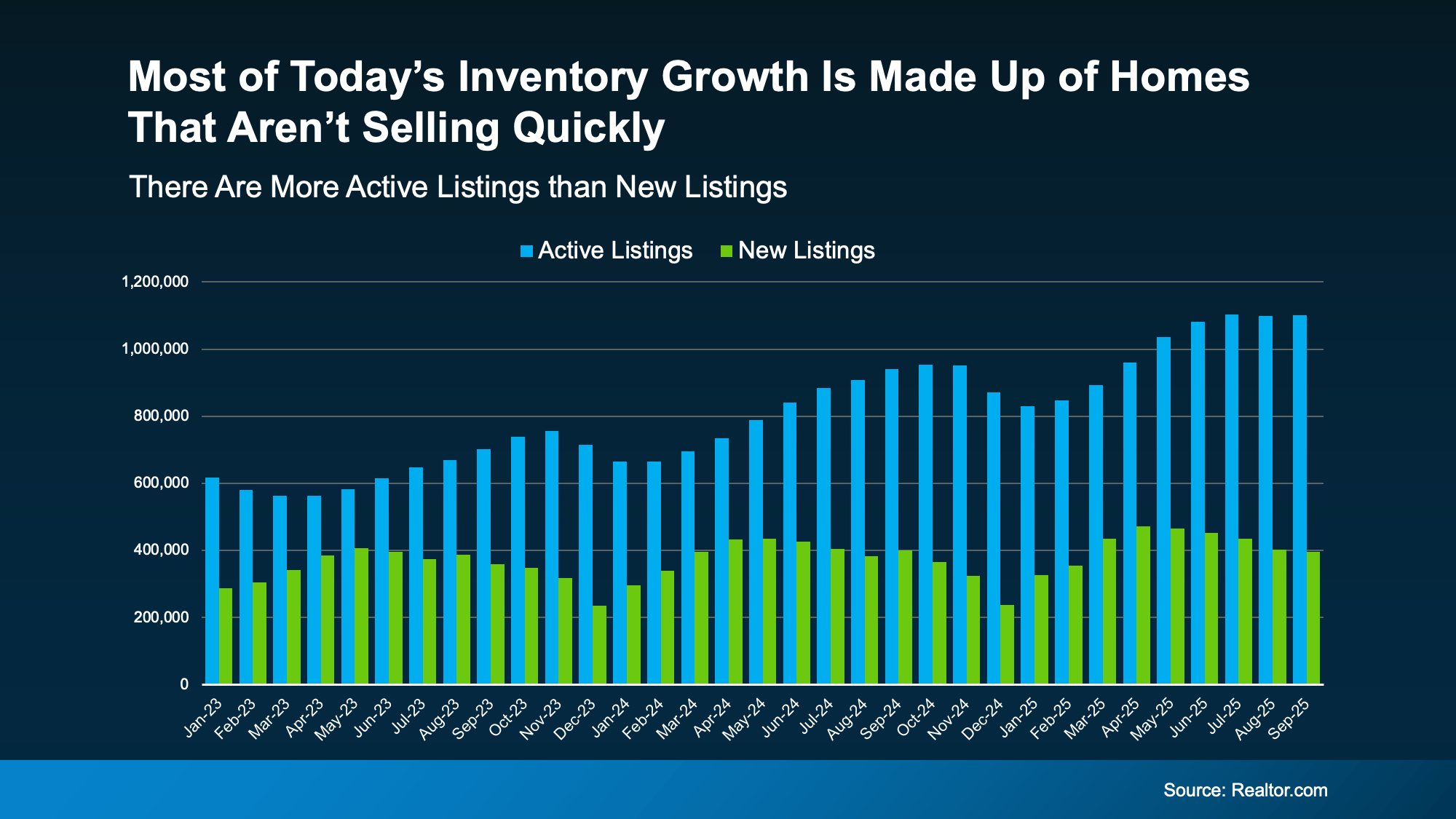
Data from Realtor.com shows most of the inventory growth lately is actually from active listings that are staying on the market and taking longer to sell (see the graph below).
The blue bars show active listings. These are the homes that are sitting month to month and not selling. The green bars are new listings, the homes that were just put on the market. And it’s clear there are fewer new listings compared to how many are staying on the market unsold.
 Since you don’t want your house to be one of the ones that take a long time to sell, let’s break down where things can go sideways and how to set yourself up to sell quickly.
Why Some Homes Sell and Others Sit
The secret to selling in today’s market is simple. Make sure your house is easy for buyers to say yes to as soon as it is listed.
Price it based on current conditions (not what your neighbor sold for 3 years ago). Make important repairs. And highlight the best things about your house. If you do that, it will sell in any market – sometimes even faster than you’d think. Because the truth is, homes that are priced right today are still selling.
It’s the homeowners who are clinging to outdated expectations that are seeing their house sit and their listing go stale. According to Redfin and HousingWire, here are some of the most common reasons sales stall out:
- Priced it too high from the start
- Skipped necessary repairs before listing
- Didn’t stage the house well
- Sellers won’t negotiate with buyers
- Limited availability for showings
- Ineffective marketing or listing pictures
Most of those things didn’t matter as much just a few years ago. When inventory was at a record low, sellers could skip the prep, name their price, and still walk away with multiple offers over their asking price.
But today’s market is different now that inventory has grown. And that means your approach needs to be different too.
You don’t want to try out old strategies and aim too high just to see what sticks. Your first few weeks on the market are everything. That’s when your listing gets the most attention – and when pricing or presentation mistakes hurt the most. Get it wrong up front and your house will sit…and sit. Get it right, and it’ll be snatched up before you know it.
The Right Agent Helps Your House Stand Out
Selling quickly isn’t about luck. It’s about knowing how to play to the market you’re in. And that’s where your agent comes in.
A great agent will analyze your local market, suggest a price based on the latest comparables sold in your neighborhood, and create a marketing plan that makes buyers pay attention from day one. They’ll also walk you through any repairs you need to make or whether you need to bring in a staging company. As the National Association of Realtors (NAR) explains:
“Home sellers without an agent are nearly twice as likely to say they didn’t accept an offer for at least three months; 53% of sellers who used an agent say they accepted an offer within a month of listing their home.”
That’s the power of getting it right (and getting expert help) from the start.
Bottom Line
There are more homes for sale today than there were even just a year ago, but that doesn’t have to work against you.
When your house is priced right, shows well, and is marketed effectively, it will sell. Let’s connect if you want to know how to make that happen in our market this fall.
Read from source: “Click Me”
Questions, Comments or For more information you can call
Christian Penner Branch Manager at 561-316-6800 or email us at TheMortgageTeam@ChristianPenner.com
Approval Hotline: 561-316-6800
Helping You Achieve the American Dream of Home Ownership


Or You can click “Call Me” below to call Christian Penner directly using Google Voice