The Fed Cut Rates. Why Mortgage Rates Did Not Fall
Introduction:
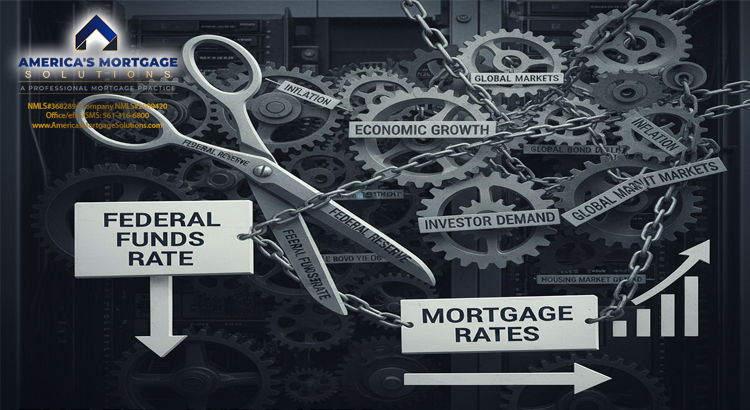
Mortgage rates did not fall after the Fed cut rates by three quarters of a percent, and that surprises many people. The reason is simple. Mortgage rates are not set by the Federal Reserve. They are set by markets.
Mortgage rates follow inflation expectations, labor data, and long term bond yields. When investors are unsure about inflation or economic direction, they demand higher returns. That keeps mortgage rates elevated even when the Fed cuts short term rates.
As we look toward 2026, conditions may change. A weakening labor market, leadership changes at the Fed, and a return to quantitative easing would all put downward pressure on mortgage rates.
However, lower rates do not automatically solve affordability. If demand increases faster than supply, prices rise and erase much of the benefit.
Smart buyers and homeowners are focusing on preparation, not prediction.
Why So Many Homeowners Were Confused
When headlines announced The Fed Cut Rates, many homeowners and buyers across West Palm Beach, North Palm Beach, Wellington, and throughout Florida FL expected one immediate outcome: lower mortgage payments. Instead, Mortgage Rates stayed stubbornly high.
This disconnect sparked confusion, frustration, and countless questions such as:
-
Why didn’t my Mortgage Rate drop?
-
If the Fed cuts short term rates, shouldn’t mortgages follow?
-
What does this mean for my ability to buy or refinance?
As Christian Penner, a Mortgage Broker, Mortgage Lender, Real Estate Agent, and Real Estate Advisor at America’s Mortgage Solutions (AMS), I work directly with buyers and homeowners navigating these exact concerns every day. This article breaks down what actually happened — and more importantly, how to prepare for the next rate cycle instead of reacting too late.
Understanding the Role of the Federal Reserve
What the Federal Reserve Actually Controls
The Federal Reserve plays a powerful role in the economy, but its influence is often misunderstood. When people hear The Fed Cut Rates, they assume all interest rates fall equally. That is not how the system works.
The Federal Reserve directly controls:
-
Overnight lending between banks
-
Short-term borrowing costs
-
Liquidity in the financial system
However, Mortgage Rates are not directly set by the Federal Reserve.
Voice Search Answer:
Does the Federal Reserve set mortgage rates?
No. Mortgage rates are set by financial markets, not directly by the Federal Reserve.
Why Mortgage Rates Didn’t Fall After the Fed Cut Rates
Mortgage Rates Are Market-Driven, Not Fed-Driven
Even though The Fed Cut Rates, mortgage pricing is determined by investors who buy mortgage-backed securities. These investors base their decisions on:
-
inflation expectations
-
economic direction
-
Long-term bond yields
-
Risk tolerance
If investors believe inflation will remain elevated, they demand higher returns — which keeps Mortgage Rates high.
Inflation Expectations: The Biggest Driver of Mortgage Rates
Why Inflation Matters More Than Fed Announcements
Among all factors influencing mortgage pricing, inflation expectations are the most powerful.
When investors fear rising inflation:
-
The future value of money decreases
-
Fixed-rate returns become less attractive
-
Investors demand higher yields
This is why Mortgage Rates can remain high even after The Fed Cut Rates.
Voice Search Friendly Explanation:
Why does inflation keep mortgage rates high?
Because lenders and investors need higher returns to offset the loss of purchasing power caused by inflation.
The Labor Market’s Role in Mortgage Rates
Strong Jobs Can Mean Higher Rates
A strong labor market signals economic resilience — but it also fuels inflation.
When employment is strong:
-
Wages rise
-
Consumer spending increases
-
Inflation pressures grow
As a result, investors remain cautious, keeping Mortgage Rates elevated even if the Fed cuts short term rates.
Economic Direction and Investor Psychology
Why Uncertainty Keeps Rates High
Markets don’t react to today — they price tomorrow. When there is uncertainty about economic direction, investors hedge risk by demanding higher yields.
Key uncertainties include:
-
Inflation persistence
-
Global instability
-
Policy inconsistency
-
Fiscal spending
Until confidence improves, Mortgage Rates may stay higher than consumers expect.
Leadership Changes at the Fed and Future Rate Outlook
Why Leadership Matters
Potential leadership changes at the Fed could influence monetary policy tone, risk appetite, and market confidence.
A shift toward:
-
More accommodative policy
-
Quantitative easing
-
Softer inflation tolerance
could eventually lower long-term yields and Mortgage Rates — but markets must believe the change is durable.
Why Lower Rates Alone Don’t Fix Affordability
The Supply and Demand Problem
Even if Mortgage Rates fall, affordability may not improve if demand rises faster than supply.
In markets like West Palm Beach, North Palm Beach, and Wellington, inventory constraints mean:
-
Buyers compete aggressively
-
Home prices rise
-
Monthly payments remain high
Lower rates without increased supply often lead to higher prices — not better affordability.
What Smart Buyers Are Doing Differently
Focusing on Preparation, Not Prediction
Smart buyers are not waiting for perfect timing. They are focusing on preparation.
This includes:
-
Improving credit scores
-
Reducing debt-to-income ratios
-
Understanding loan programs
-
Building liquidity
-
Structuring long-term plans
Preparation gives buyers leverage regardless of where Mortgage Rates go next.
Advice for Homeowners in Florida FL
Strategic Planning Beats Rate Guessing
For homeowners in Florida FL, the smartest move isn’t guessing when rates will fall — it’s positioning yourself to act quickly when opportunities appear.
That might mean:
-
Equity analysis
-
Cash-out strategy planning
-
Refinance readiness
-
Investment property evaluation
Local Insight: South Florida Housing Dynamics
As a Mortgage Broker and Real Estate Advisor serving West Palm Beach, North Palm Beach, and Wellington, I see firsthand how local dynamics shape outcomes.
South Florida markets are driven by:
-
Inbound migration
-
Limited housing supply
-
Cash buyers
-
Investor demand
These forces can override national trends and keep prices elevated even during rate shifts.
Experience Matters in Uncertain Rate Environments
Why E-E-A-T Is Critical in Mortgage Guidance
Applying E-E-A-T means advice comes from real-world experience — not theory.
Christian Penner, with America’s Mortgage Solutions (AMS), brings:
-
Hands-on lending experience
-
Local market expertise
-
Cross-disciplinary insight as a Mortgage Lender, Real Estate Agent, and Real Estate Advisor
-
Transparent, strategy-first guidance
Trust is built through clarity, not predictions.
How to Prepare for the Next Rate Cycle
Action Steps You Can Take Today
To prepare for the next rate cycle, consider:
-
Credit optimization strategy
-
Loan scenario modeling
-
Payment sensitivity analysis
-
Property value reassessment
-
Long-term financing alignment
Those prepared benefit first when conditions shift.
Frequently Asked Voice Search Questions
Why didn’t mortgage rates fall when the Fed cut rates?
Because Mortgage Rates are driven by inflation expectations, investor demand, and long-term bond markets — not directly by the Federal Reserve.
Will mortgage rates go down in 2026?
They could if inflation cools, the labor market weakens, or monetary policy shifts — but nothing is guaranteed.
Should I wait to buy until rates fall?
Waiting can increase competition and prices. Smart buyers prepare early instead.
Conclusion: Strategy Beats Timing
The reality is simple: The Fed Cut Rates, but mortgage markets didn’t follow because inflation, labor strength, and uncertainty still dominate investor behavior.
Instead of waiting, focusing on preparation puts you in control — regardless of market timing.
Schedule a Strategy Call
If you want clarity, confidence, and a plan — not guesswork:
👉 Schedule a strategy call with Christian Penner
Mortgage Broker | Mortgage Lender | Real Estate Agent | Real Estate Advisor
America’s Mortgage Solutions (AMS)
Serving West Palm Beach, North Palm Beach, Wellington, Florida FL
Together, we’ll prepare for the next rate cycle — strategically and intelligently.
Source: “America’s Mortgage Solutions (AMS)”
Questions, Comments or For more information you can call
Christian Penner Branch Manager at 561-316-6800 or email us at TheMortgageTeam@ChristianPenner.com
Approval Hotline: 561-316-6800
Helping You Achieve the American Dream of Home Ownership


Or You can click “Call Me” below to call Christian Penner directly using Google Voice