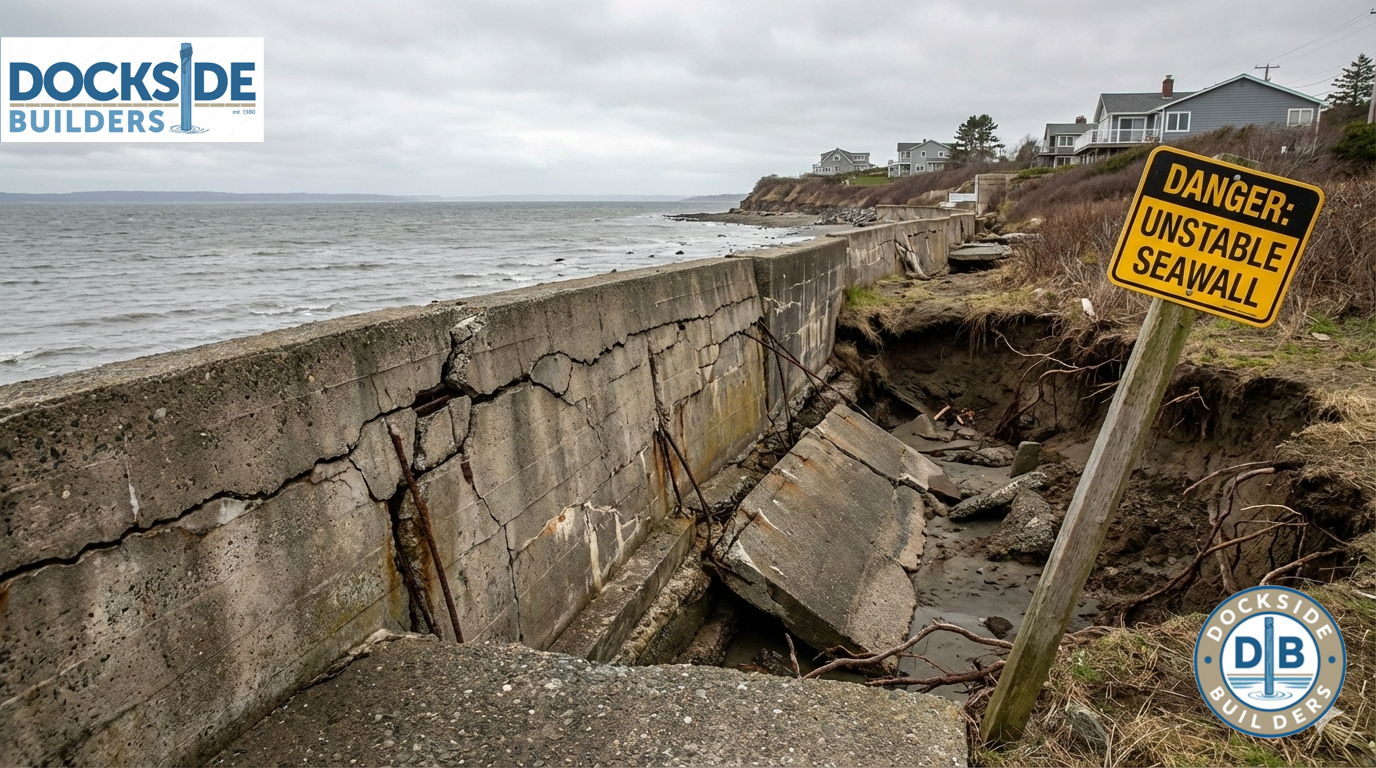
Signs Your Seawall Needs Repair or Replacement in Sebastian, Florida FL
Every waterfront property owner in Sebastian, Florida FL knows the beauty and value of living by the water. But maintaining that slice of paradise means protecting your shoreline — and your investment — from the relentless forces of nature. Seawalls are your first and most critical line of defense against erosion, tidal surges, and storm damage. Because of their importance in erosion control and waterfront safety, understanding when a seawall is failing can save you time, money, and stress.
In this comprehensive guide, we’ll walk through the most common signs your seawall needs repair or replacement, why timing matters, and how Dockside Builders — a trusted provider of Boat Houses Builders, Boat lifts Builders, Decks Builders, Docks Builders, Bridges Builders, Seawalls Builders, Walks Builders, Storm & Water Cleanup Services — can help you protect your Sebastian waterfront property.
Table of Contents
-
The Importance of Seawall Maintenance
-
Understanding Erosion and Its Impact
-
Signs Your Seawall Needs Attention
-
Cracks and Structural Damage
-
Tilted or Leaning Walls
-
Gaps at Joints or Footings
-
Soil Loss and Sinkholes
-
Bowing or Bulging
-
Rotting or Rusting Materials
-
Water Seeping Through
-
Unusual Vegetation Growth
-
Changes in Tidal Flow Near Your Property
-
-
The Risks of Ignoring Seawall Damage
-
Seawall Inspection: What to Expect
-
Repair vs. Replacement: How to Decide
-
Advanced Erosion Control Options for Sebastian Waterfronts
-
Why Choose Dockside Builders
-
Frequently Asked Questions (FAQs)
-
Contact Dockside Builders
1. The Importance of Seawall Maintenance
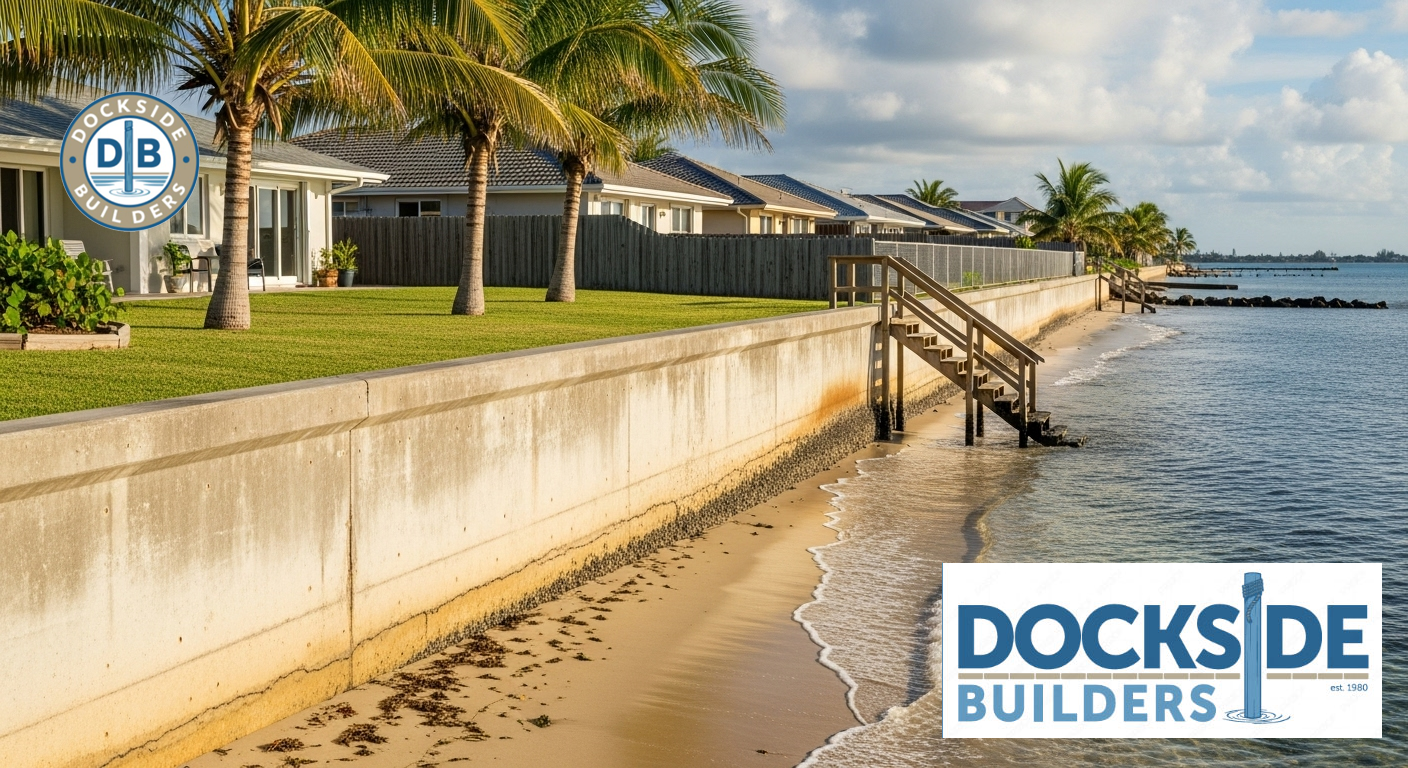
Seawalls serve as a critical buffer between land and water — especially in coastal communities like Sebastian, Florida FL. A properly maintained seawall:
-
Protects your property from erosion and storm damage.
-
Preserves your shoreline landscape.
-
Helps maintain property value.
-
Supports waterfront safety for family, guests, and tenants.
-
Reduces the risk of costly future repairs.
Regular evaluation and proactive maintenance can mean the difference between a manageable repair and a full-scale replacement.
2. Understanding Erosion and Its Impact
Erosion is a natural process driven by water movement, tides, storms, and human activities. Over time, even the strongest seawall can weaken under constant pressure. Effective erosion control is essential for properties exposed to high tides, waves, and seasonal storm activity.
Left unchecked, erosion can:
-
Undermine the foundation of your seawall.
-
Cause soil to shift away from your structure.
-
Lead to sinkholes or collapse.
-
Create safety hazards for your family and guests.
Recognizing the early signs of erosion and damage allows you to act before the situation escalates.
3. Signs Your Seawall Needs Attention
Below are key indicators that your seawall may be compromised and needs evaluation, repair, or replacement by a professional Seawalls Builders team like Dockside Builders.
3.1 Cracks and Structural Damage
One of the most obvious signs your seawall needs attention is the presence of cracks — especially large or growing ones. These can occur for many reasons:
-
Soil movement beneath the wall.
-
Water pressure buildup.
-
Material fatigue from prolonged exposure to saltwater.
Even small cracks can allow water to seep through, accelerating deterioration and affecting structural integrity.
3.2 Tilted or Leaning Walls
If your seawall appears to be leaning towards the water or has shifted sideways, this is a serious structural concern. Leaning walls signal that the support beneath your seawall has compromised, often due to soil erosion behind the structure.
A tilted seawall:
-
Indicates instability.
-
Can lead to a sudden collapse.
-
Requires urgent attention to prevent further damage.
3.3 Gaps at Joints or Footings
Concrete seawalls are constructed in sections joined together with materials designed to give strength and flexibility. When these joints start to separate or gaps form at the footings, it’s a strong indicator of underlying issues.
Water can penetrate these gaps, undermining the soil behind the wall and weakening the entire structure.
3.4 Soil Loss and Sinkholes
Soil loss can occur slowly and invisibly — until it becomes a major problem. Check your waterfront for:
-
Depressions or holes near the seawall.
-
Areas where the soil has noticeably receded toward the water.
-
Unexplained dips in your lawn or landscaping near the shoreline.
These may signal that the earth supporting your seawall has washed away, weakening its foundation.
3.5 Bowing or Bulging
Seawalls shouldn’t bend or balloon outward. If you notice the face of your seawall bowing toward the water, it’s a sign that the pressure from behind the wall — either from soil or water buildup — is exceeding the structure’s ability to withstand it.
This condition requires professional intervention, because it’s likely to worsen without proper stabilization.
3.6 Rotting or Rusting Materials
Older seawalls often use wood or steel components. Look for signs of:
-
Rot in wooden bulkheads.
-
Rust or corrosion on metal supports.
-
Splintered or disintegrating materials.
These are not cosmetic issues — they reflect deep-seated material failure that compromises structural integrity and waterfront safety.
3.7 Water Seeping Through
If you notice water seeping through your seawall — especially during high tide, heavy rain, or after storms — this is a critical sign that your seawall is no longer effectively holding back water. Seepage accelerates soil erosion and weakens support, requiring an immediate seawall inspection by experts.
3.8 Unusual Vegetation Growth
Plants, shrubs, or grasses growing between seawall cracks or joints may seem harmless, but root systems can widen gaps and exacerbate structural deterioration. Vegetation often indicates moisture is present where it shouldn’t be — another sign that your seawall is compromised.
3.9 Changes in Tidal Flow Near Your Property
Sometimes damage isn’t visible from land — but changes in how water interacts with your shoreline can be a sign of trouble. If you notice unusual wave patterns, deeper channels forming near the wall, or accelerated sediment loss during tides, erosion may be weakening your seawall from below.
4. The Risks of Ignoring Seawall Damage
Delaying repairs can turn a manageable situation into an expensive disaster. The risks of ignoring warning signs include:
-
Complete structural failure
-
Loss of landscaping or property near the shoreline
-
Undermined driveways, patios, or walkways
-
Increased risk of injury or liability for waterfront visitors
-
Reduced property value
-
Higher costs from emergency repairs and erosion control
A proactive approach to maintaining and repairing your seawall not only saves money — it protects your investment and enhances waterfront safety for years to come.
5. Seawall Inspection: What to Expect
Professional seawall inspection services go beyond a casual walk along the waterfront. Experts will:
-
Examine the seawall from both land and water sides
-
Measure vertical alignment and check for tilting
-
Assess soil conditions behind the wall
-
Look for signs of scour or erosion at the base
-
Evaluate wall material integrity (steel, concrete, wood, etc.)
-
Identify cracks, shifts, and separations
-
Recommend repair or replacement options
A thorough inspection gives you a clear picture of your seawall’s condition and the best path forward.
6. Repair vs. Replacement: How to Decide
Not all seawall problems require complete replacement. In many cases, a targeted seawall repair can restore functionality and extend the life of the structure. The decision depends on:
When Repair Is Recommended
-
Localized cracks or damage
-
Minor joint separation
-
Early signs of tilt
-
Small areas of erosion
When Replacement Is Best
-
Extensive structural failure
-
Severe tilting or bowing
-
Widespread erosion undermining the base
-
Decades-old seawalls with multiple failure points
Professional assessment by experienced Seawalls Builders is the safest way to make this decision — and to ensure long-lasting results.
7. Advanced Erosion Control Options for Sebastian Waterfronts
Sebastian’s coastal environment demands solutions that balance durability and environmental responsibility. Common erosion control options include:
Riprap Armor
Layered rock placed along the base of the seawall to absorb wave energy and reduce impact on the structure.
Sheet Piling
Driven steel or vinyl sheets create a continuous barrier beneath the soil surface that strengthens resistance to water penetration.
Revetment Systems
Sloped structures that dissipate wave energy and stabilize soil — often used in conjunction with seawalls.
Living Shorelines
Natural erosion control using plants, oyster reefs, and sand to protect against soil loss while maintaining habitat health.
Selecting the right solution depends on your waterfront conditions, tidal action, soil type, and long-term use goals. A qualified professional can guide you through choosing the best erosion control system for your property.
8. Why Choose Dockside Builders
When it comes to shoreline protection and waterfront construction in Sebastian, Florida FL, Dockside Builders stands out as a trusted partner with decades of experience offering:
-
Professional seawall inspection and assessment
-
Customized seawall repair and replacement services
-
Advanced erosion control solutions
-
Full-service waterfront construction
-
Expertise in Boat Houses Builders, Boat lifts Builders, Decks Builders, Docks Builders, Bridges Builders, Seawalls Builders, Walks Builders, Storm & Water Cleanup Services
-
Commitment to quality, safety, and long-term performance
Whether you’re dealing with aging infrastructure or preparing for upcoming seasonal weather, Dockside Builders can provide the solutions you need — backed by professional craftsmanship and local knowledge.
9. Frequently Asked Questions (FAQs)
What causes seawall damage?
A combination of natural and human factors:
-
Continuous water pressure and tidal action
-
Storm surge and wave impact
-
Soil erosion from rainwater runoff
-
Wear and aging of building materials
How often should I schedule a seawall inspection?
Annual inspections are recommended, especially in coastal areas like Sebastian, Florida FL. Additional inspections are wise after major storms or high-tide events.
Can minor damage be repaired without full replacement?
Yes — many minor issues can be resolved through precision seawall repair if caught early.
How long does a seawall last?
Lifespan varies by material and conditions but typically ranges from 20 to 50+ years with proper maintenance and occasional repairs.
Do seawall repairs require permits?
Often, yes. Local agencies may require permits for waterfront or shoreline work. Dockside Builders can help navigate permitting requirements.
10. Contact Dockside Builders
If you suspect your seawall needs attention — or you just want peace of mind with a professional seawall inspection — contact the team trusted by Sebastian waterfront property owners.
Phone: 772-664-6798
Email: Dylan@DocksideBuilders.com
Email: DocksideBuildersFL@gmail.com
From preventive maintenance to full restoration and erosion control solutions, Dockside Builders delivers reliable results with complete dedication to your waterfront safety and property value.
Source: “America’s Mortgage Solutions (AMS)”
Questions, Comments or For more information you can call
Christian Penner Branch Manager at 561-316-6800 or email us at TheMortgageTeam@ChristianPenner.com
Approval Hotline: 561-316-6800
Helping You Achieve the American Dream of Home Ownership


Or You can click “Call Me” below to call Christian Penner directly using Google Voice








 by sander traa (https://unsplash.com/@sandertraa)
 by Hassaan Here (https://unsplash.com/@hassaanhre)
 by Adrien Olichon (https://unsplash.com/@adrienolichon)
 by Atul Vinayak (https://unsplash.com/@atulvi)
 by Her Pratam (https://unsplash.com/@herpratam)
 by Timofey Radkevich (https://unsplash.com/@beauty_is_everywhere)
 by Gautam Das (https://unsplash.com/@cornierswings829)
 by T ROY (https://unsplash.com/@tz1991)
 by aboodi vesakaran (https://unsplash.com/@aboodi_vm)
 by maks_d (https://unsplash.com/@maks_d)
 by MAURO FOSSATI (https://unsplash.com/@fox70)